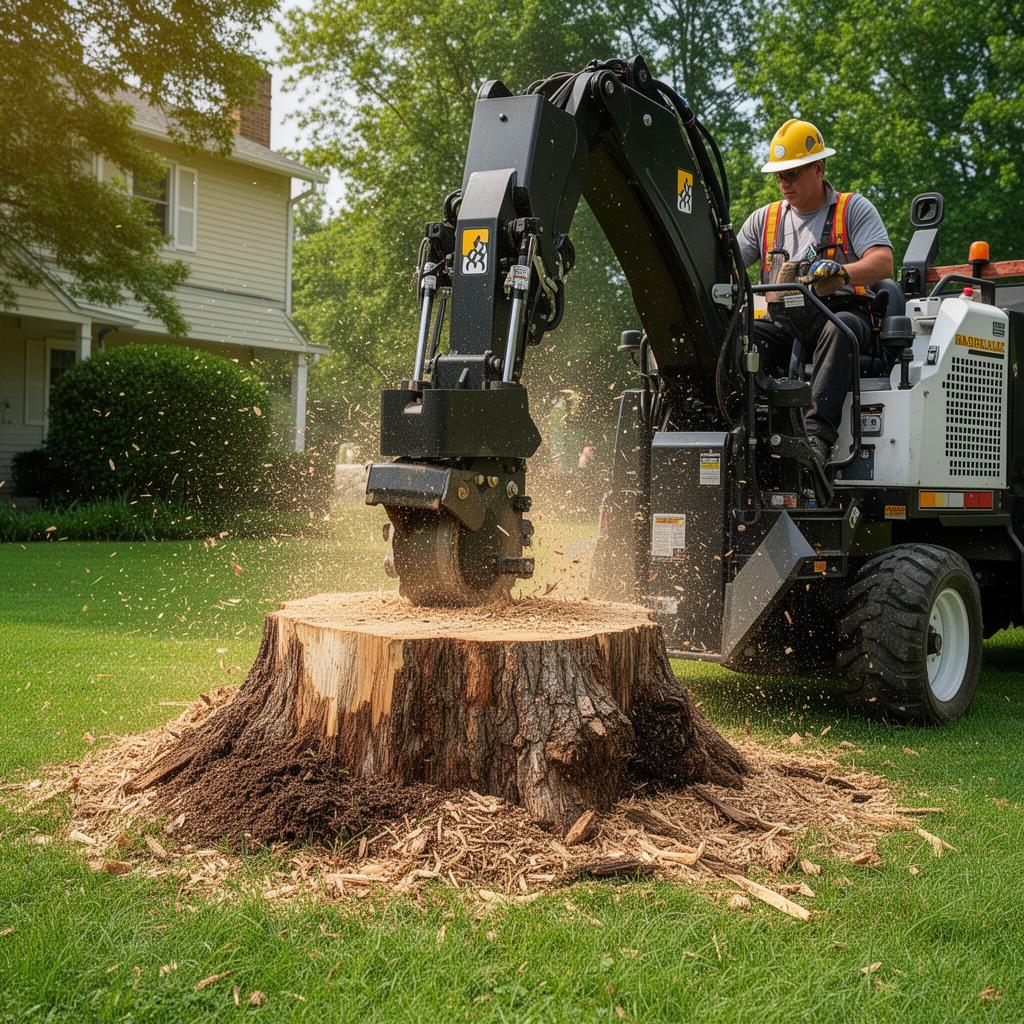
After a tree comes down in Bellevue, the stump is left behind — and it doesn't go anywhere on its own. Bellevue Elite Tree Service grinds stumps four to eight inches below grade so you can replant, re-sod, pour concrete, or just reclaim usable yard space without a permanent reminder of what used to be there.
Why grinding beats leaving the stump
A leftover stump is more than an eyesore. It's a trip hazard, a mower-killer, a perfect habitat for carpenter ants and termites that may eventually move into your house, and a host for root-rot fungi that can spread to nearby healthy trees. In Bellevue's wet climate, decay accelerates fast, and stumps left in place for two or three years often start producing mushroom fruiting bodies that signal soil-borne fungal pressure.
Grinding removes the visible stump and the upper root mass, restoring usable yard space and stopping pest harborage in its tracks.
How stump grinding works
Our tracked stump grinders pulverize the stump and major buttress roots into wood chip mulch that mixes with the surrounding soil. We grind four to eight inches below grade as standard, deeper on request if you plan to replant in the same spot or pour a hard surface. Chips can be left on site as mulch, raked into the hole, or hauled away depending on your preference.
Most Bellevue stumps grind in 30 minutes to two hours. Larger stumps from mature Douglas firs or western red cedars can take longer, and tight-access yards may require a smaller machine carried in by hand.
Stump grinding cost in Bellevue
Typical Bellevue stump grinding runs $200–$500 per stump, with multi-stump discounts when we can grind several on a single visit. Pricing depends on diameter, access, root flare, and how deep you need us to go. If we're already on site for a removal, adding stump grinding usually saves on the per-stump rate.
Every quote is free, on-site, and written so you know exactly what you're paying for before we start.
After grinding: replanting in Bellevue
If you plan to plant a new tree in the same spot, let us know — we'll grind deeper and excavate enough material so the new root ball has clean soil to establish in. Otherwise, fill the hole with topsoil, tamp lightly, and seed or sod within a few weeks to prevent settling.