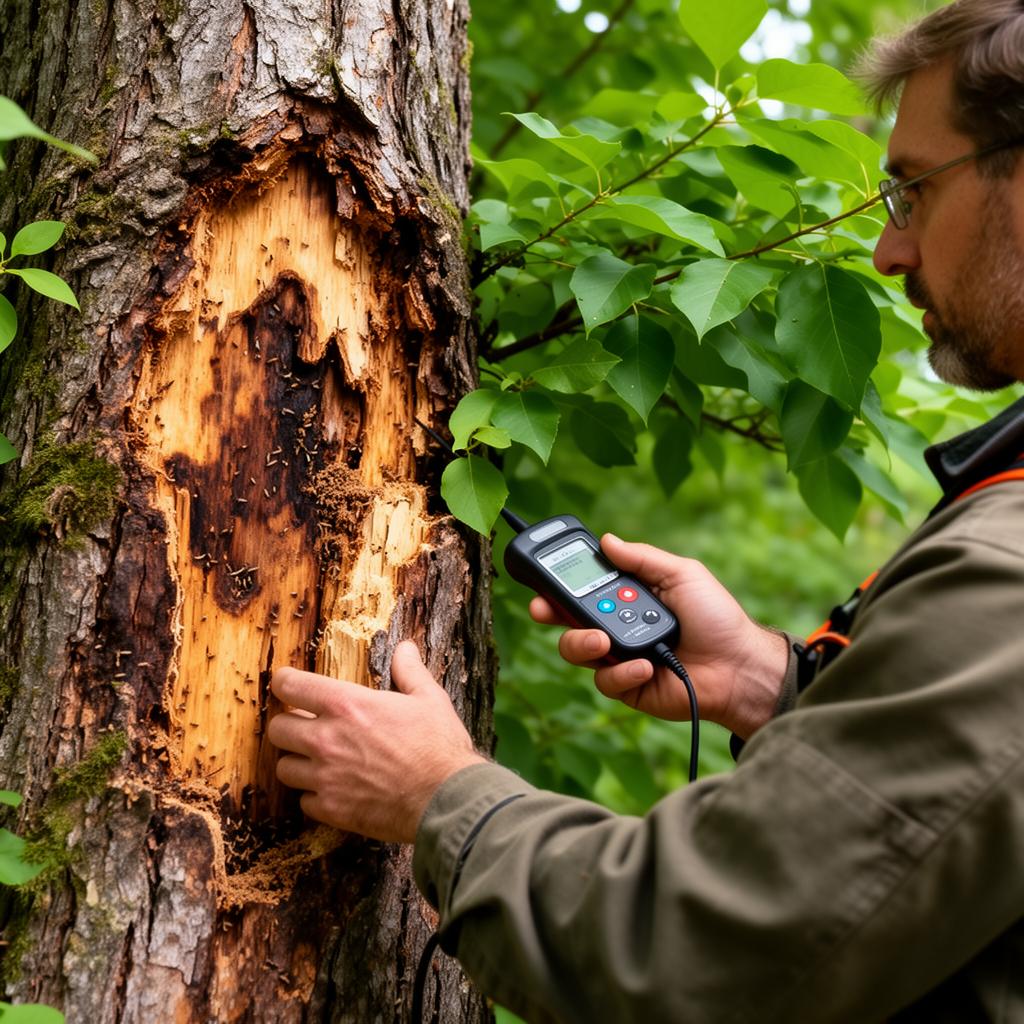
Healthy trees are valuable assets on Bellevue properties — they cool homes in summer, raise property values, and define the character of Eastside neighborhoods. When a tree starts to decline, early intervention almost always costs less than removal and replacement. Bellevue Elite Tree Service provides diagnosis, treatment, structural support, and deep root fertilization for stressed and declining trees.
Common tree health issues in Bellevue
Bronze birch borer is killing river and white birches across the Eastside. Anthracnose causes leaf blight on dogwoods and sycamores after wet springs. Root weevils chew rhododendron and ornamental conifer foliage. Phytophthora root rot kills cedars and rhododendrons in poorly drained Bellevue soils. Cedar flagging and crown dieback often trace back to summer drought stress two or three years earlier.
Many issues are misdiagnosed by general landscapers. An ISA-certified arborist reads the whole system — soil, irrigation, grade, pest pressure, fungal indicators — before recommending treatment.
Cabling and bracing
Mature Bellevue trees with co-dominant leaders or weak unions can often be saved with cable and brace installations rather than removed. Steel cables installed high in the canopy redistribute wind load between major limbs, and through-bolts at weak unions add structural support. Properly installed cabling can extend the safe service life of a heritage tree by decades.
Cabling is not a permanent fix — it's regular maintenance. Cables should be inspected every few years and replaced as needed.
Deep root fertilization
Bellevue's urban soils are often compacted from construction, depleted of organic matter, and short on the micronutrients conifers need. Deep root fertilization injects a liquid blend of nitrogen, micronutrients, and biostimulants directly into the root zone at six to eight inches below grade. It bypasses the lawn (which would otherwise outcompete the tree) and delivers nutrition where the tree can actually use it.
Trees most likely to benefit: stressed conifers showing flagging, recently transplanted ornamentals, trees recovering from construction damage, and mature trees in declining vigor.
When treatment isn't enough
Not every tree can be saved, and an honest arborist will tell you when removal is the right call. We don't recommend treatments that won't work, and we'll always explain the realistic prognosis before you spend money. The goal is the best outcome for your property — not the biggest invoice.